STEM CELLS
What are stem cells?
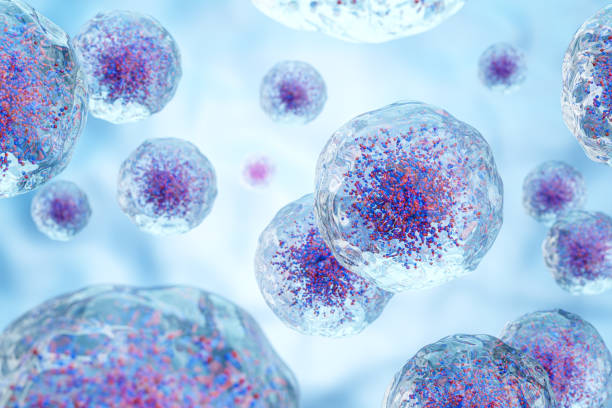
Stem cells serve as the foundational building blocks of the body, giving rise to all specialized cells with distinct functions.
What are (MSCs) mesenchymal type of stem cells?
MSCs stand out as adult stem cells endowed with self-renewal, immunomodulatory, anti-inflammatory, signaling, and differentiation capabilities. The self-renewal capacity of MSCs is marked by their ability to undergo division and transform into various specialized cell types within specific tissues or organs. These versatile cells can be derived from diverse sources, including adipose tissue (fat), bone marrow, umbilical cord tissue, blood, liver, dental pulp, and skin.

How are mesenchymal stem cells (MSCs) used in the clinical setting?
There are many applications in treating various diseases, due to their self-renewal, differentiation, anti-inflammatory, and immunomodulatory capabilities, which have been demonstrated both in-vitro and in-vivo. These studies have substantiated the understanding of the mechanisms, safety, and efficacy underlying MSC therapy in different clinical applications.
Extensive research delves into the intricate mechanisms of mesenchymal stem cells (MSCs), highlighting their diverse capabilities. These versatile characteristics empower MSCs for deployment across a spectrum of clinical scenarios targeting numerous degenerative conditions.
Why are umbilical cord stem cells used?
Emerging research indicates that mesenchymal stem cells derived from umbilical cord tissue (UC-MSCs) may exhibit greater potency compared to other MSC sources, potentially enhancing their clinical effectiveness.
Differentiation, referring to the natural maturation process of a stem cell into distinct forms and functions, exemplifies the versatile potential of a single mesenchymal stem cell to develop into various cell types.
Immunomodulatory capabilities enable MSCs to regulate the immune system, promoting an inflammatory response during immune under-activation and mitigating inflammation in cases of immune overactivation. This pivotal role positions MSCs as key players in preventing autoimmune disorders where the immune system targets the body’s own tissues.
Anti-inflammatory properties of MSCs contribute to the reduction of harmful inflammation within the body. While inflammation is a vital immune response for protection and repair, MSCs play a crucial role in curbing excessive inflammation, preventing its detrimental effects on the body.
Are mesenchymal stem cells (MSCs) safe?
Several peer-reviewed studies have established the safety of Mesenchymal Stem Cell procedures. Furthermore, throughout our study, no instances of long-term negative side effects have been reported.
Is there any chance my body rejects mesenchymal stem cells (MSCs)?
MSCs exhibit a certain level of immunosuppressive activity, making them less susceptible to the immune response compared to other foreign cells. Mesenchymal stem cells sourced from umbilical cord tissue enjoy universal acceptance and carry no risk of rejection. These MSCs from umbilical cord tissue are essentially considered “brand new” and immune-privileged, remaining unclaimed by the body.
Furthermore, in contrast to treatments like organ transplants, there is no use of blood products, and no HLA matching is required for umbilical cord tissue-derived mesenchymal stem cells (MSCs). This type of MSC administration faces no possibility of rejection.
Do stem cells get trapped in the lungs? (Pulmonary first pass effect)
Mesenchymal stem cells (MSCs), particularly those obtained from umbilical cord tissue, exhibit an impressive ability to evade entrapment in the lungs, attributed to their optimal size (17-19 µm) and efficient navigation through the pulmonary circulation. While MSCs may encounter the pulmonary first-pass effect following intravenous administration, their exceptional homing capabilities allow precise targeting of areas affected by inflammation and injury throughout the body, significantly augmenting their therapeutic effectiveness. The transient presence of MSCs in the lungs does not diminish their potential benefits; on the contrary, they actively exert paracrine effects by releasing trophic factors and modulating the immune response.
How can I determine if stem cells can help me?
Our protocol’s primary objective is to significantly diminish chronic low-grade inflammation levels for an extended duration. Stem cells possess a unique intrinsic property that draws them towards inflammation within the body. Research indicates that stem cells can effectively regenerate damaged or diseased tissues, mitigate inflammation, and modulate the immune system, thereby promoting improved health and enhanced quality of life.
What are some conditions treated with mesenchymal stem cells?
Numerous studies have highlighted the potential positive impact of mesenchymal stem cells (MSCs) on various conditions, including but not limited to:
- Alzheimer’s, Parkinsons’
- Athletic injuries: tendon tears, cartilage tears, e.g. Rotator cuff tears, meniscal injuries etc.
- Autoimmune conditions: Crohn’s Disease, Lupus, Multiple Sclerosis, Rheumatoid Arthritis,
- Brain Injury (TBI)
- COPD (or other degenerative/inflammatory lung conditions)
- COVID-19 (long-haul/acute)
- Chronic Inflammation
- Diabetes (Type 1)
- Hair loss
- Heart Failure/Heart Disease
- Kidney Disease
- Liver Disease
- Lyme Disease
- Neurological Conditions (degenerative)
- Neuropathy
- Parkinson’s
- Reflex Sympathetic Dystrophy (RSD) or (CRPS)
- Spinal injuries (e.g. Disc Herniations), Cord Injuries
- Stroke/CVA (ischemic & hemiplegic)
Can stem cells help prevent aging?
Our current understanding of stem cells shows that it is technically feasible to enhance both health and lifespan. Stem cells play a pivotal role in this process, forming a sophisticated shield when combined with anti-aging genes to counteract the effects of aging.
Stem cells contribute significantly to the delay of the aging process by creating a complex and protective shield that stands firm against the erosive impact of aging. This shield, a primary target for absorbing the shocks of aging, holds the potential to neutralize these shocks, leading to a more youthful state. Research suggests that interventions involving stem cells, which boost rejuvenation and maintain a balance in the expression of anti-aging genes, have the capacity to delay aging and extend lifespan.
What can one Expect from stem cell transplantations for aging:
- Enhanced vitality and rejuvenation
- Improved physical activity capacity
- Thickening and improved quality of hair
- Increased libido
- Pain reduction
- Enhanced strength, balance, and overall mobility
- Improved immunity
- Overall enhancement in the quality of life
- Regulation of the immune system
- Reduction in inflammatory markers
To Learn More :